
Posture is not simply the way you stand. It is the physical expression of how your nervous system, muscles, joints, ligaments, and breathing patterns work together. It reflects how you adapt to stress — whether that stress comes from sport, sitting, screens, injuries, or emotional tension.
In integrative chiropractic care, posture is viewed as a living system. When alignment shifts, the consequences are rarely isolated. They ripple through the body, affecting performance, energy, breathing, and long-term joint health.
Below are five key postural patterns that commonly influence both longevity and performance — and how chiropractic care addresses them.
1. Forward Head Posture: The Modern Load Problem
In a neutral position, the human head weighs approximately 4.5–5.5 kg.
But as the head tilts forward, the load on the cervical spine increases dramatically:
• At 15° forward tilt: ~12 kg
• At 30° (typical texting posture): ~18 kg
• At 45°: ~22 kg
• At 60°: ~27 kg
• Just 7–8 cm forward translation: up to ~19 kg of effective load
This increased load forces the neck muscles to work constantly. Over time, this leads to:
• Muscle fatigue and chronic neck pain
• Disc degeneration and loss of cervical curvature
• Reduced lung capacity (by up to 30%)
• Cervicogenic headaches
Forward head posture doesn’t just strain the neck. It collapses the chest, limits breathing mechanics, and increases stress on the nervous system. Chiropractic adjustments reduce abnormal joint loading and restore proper cervical alignment, allowing the body to support the head efficiently again.
2. Upper & Lower Crossed Syndromes: Predictable Modern Patterns
Neurologist Vladimir Janda identified predictable muscular imbalances that develop under chronic postural stress. These patterns form a functional “X” across the body.
Upper Crossed Syndrome
With prolonged computer work and phone use, the chest muscles gradually shorten and pull the shoulders forward. The upper trapezius and neck muscles tighten in an attempt to stabilize the head. Meanwhile, the deep stabilizing muscles of the neck and mid-back become neurologically inhibited.
The result is forward head posture, rounded shoulders, shallow breathing, shoulder instability, and frequent tension headaches.
It is not simply that some muscles are tight and others are weak — it is that communication between them has become dysfunctional.
Lower Crossed Syndrome
Prolonged sitting creates a similar imbalance around the pelvis. The hip flexors remain shortened for hours each day, while the abdominal wall and gluteal muscles lose activation. The pelvis tilts forward into anterior pelvic tilt, increasing lumbar curvature.
This altered alignment increases compressive forces in the lower back and changes how force transfers through the hips and knees. Chronic lower back pain, hip discomfort, and even knee strain often develop gradually from this imbalance.
Upper and lower crossed patterns rarely exist independently. When the head shifts forward, the pelvis adapts. When the pelvis tilts, the spine compensates above it.
Integrative chiropractic care restores joint alignment, improves neuromuscular activation, and retrains functional movement patterns rather than simply stretching what feels tight.
3. The Ground-Up Principle: When the Ankle Affects the Back
The body functions as a kinetic chain. The feet are the foundation.
An ankle that has lost proper mobility — perhaps from a past sprain — can alter gait mechanics. The foot may roll excessively inward or outward. Weight distribution shifts. The pelvis rotates to compensate. The lower back tightens to stabilize the imbalance.
Over time, chronic lumbar pain may develop — not because the back is weak, but because it is compensating for dysfunction below.
This is why a comprehensive chiropractic evaluation includes the entire chain. Correcting ankle mechanics can relieve knee stress, rebalance the pelvis, and reduce lower back strain simultaneously.
4. Anterior Pelvic Tilt: The Sitting Adaptation
Anterior pelvic tilt has become increasingly common in modern society. Excessive sitting or repetitive hip flexion shortens the psoas muscle. As it tightens and weakens, it pulls the pelvis forward. The lumbar spine exaggerates its curve.
The hamstrings often feel tight, but they are actually overstretched and under constant tension. The glutes become inhibited. Core stability decreases.
Stretching alone rarely resolves the issue. Without correcting pelvic alignment and restoring proper muscle activation, tension returns.
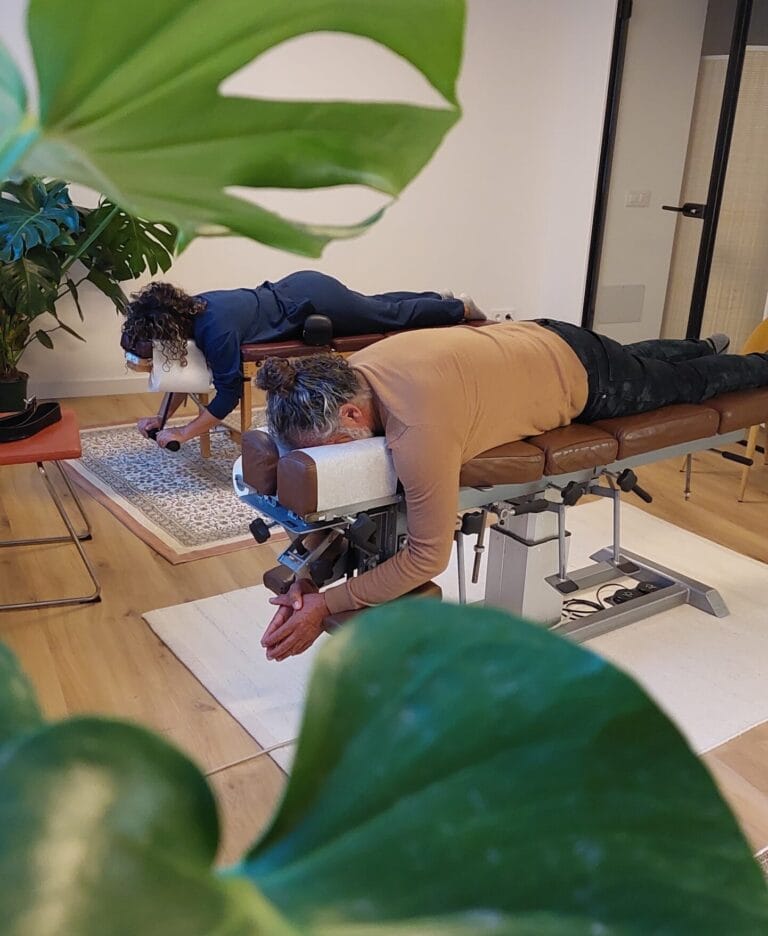
Chiropractic adjustments combined with corrective activation of the glutes and core restore balance at the foundation of the spine.
5. Suboccipital Tension & Headaches
Chronic forward head posture places sustained tension on the small muscles at the base of the skull — the suboccipitals. These muscles contract continuously to keep the eyes level.
Over time they become shortened and hypertonic, increasing compression in the upper cervical spine. Because these muscles have connective links to the dura mater (the protective covering of the brain), tension here can directly contribute to cervicogenic headaches.
Symptoms may include:
• Headaches at the base of the skull
• Pain radiating behind the eyes
• Reduced neck mobility
• Dizziness or visual strain
Restoring upper cervical alignment and reducing muscular overactivity often significantly decreases these symptoms.
Posture Is Stress — and Modern Life Is Intense
Posture is the body’s adaptation to stress. Not all stress is negative. Training, walking, and movement are positive stressors that build resilience.
However, chronic, repetitive stress reshapes the body.
As of 2025, the average person worldwide spends approximately 6 hours and 38 minutes to nearly 7 hours per day looking at screens. That represents almost 40–50% of waking hours.
For younger generations, the numbers are even higher:
- Generation Z averages around 9 hours per day of screen exposure.
- Teenagers aged 12–17 frequently average 7.5 to 9 hours daily, particularly for entertainment.
This means that nearly half of our waking lives are spent in a forward-flexed posture.
But screens are not the only influence. Sports, repetitive work patterns, shoes, walking surfaces, ankle sprains, whiplash injuries, chronic emotional stress, and even breathing patterns all shape posture over time.
Everything we experience leaves a mechanical imprint.
Why the Source of Pain Is Not Always the Cause
Pain is often deceptive.
The area that hurts may simply be the region compensating the most.
A weak glute can lead to knee pain.
An unstable ankle can create lower back tension.
Forward head posture can trigger headaches.
Chronic stress can alter breathing mechanics, reinforcing neck tightness.
Repeatedly treating only the painful area is like repairing a malfunctioning appliance over and over — when the true issue lies in the electrical circuit supplying it.
The system is intact. The signal is disrupted.
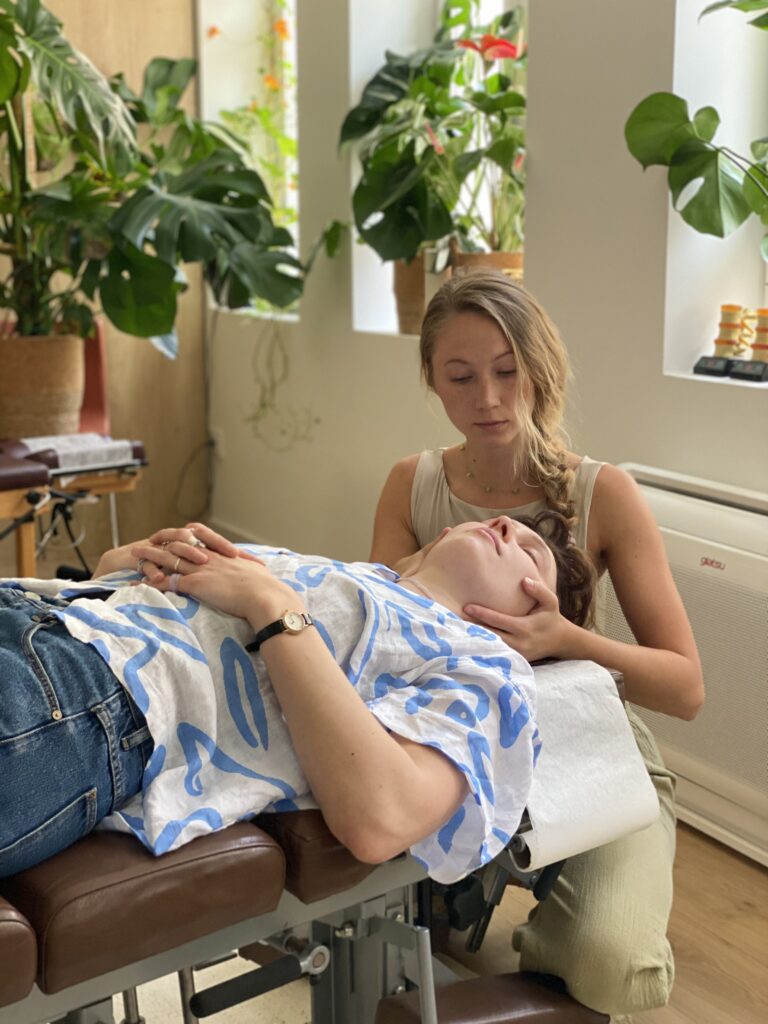
The Integrative Chiropractic Perspective
This is why integrative chiropractic care — especially when combined with Applied Kinesiology — evaluates the body as a whole.
Rather than asking only “Where does it hurt?”, the practitioner asks:
- Is a muscle inhibited or neurologically weak?
- Is another muscle overactive and compensating?
- Is a joint restricted or misaligned?
- Is a ligament or tendon unstable?
- Is one side of the body affecting the other?
- Is a tight agonist overpowering its antagonist?
By identifying where dysfunction originates, care becomes targeted and efficient. When communication between joints and nervous system is restored, posture improves naturally — not by force, but by function.
Posture, Performance, and Longevity
Posture influences how efficiently you breathe, move, lift, run, and recover. It determines how load is distributed across joints and how quickly degeneration may occur over decades.
Longevity is not simply about lifespan. It is about preserving mobility, resilience, and performance throughout life.
In a world where nearly half of our waking hours are spent looking at screens, postural care is no longer optional. It is preventative health.
Through integrative chiropractic care, posture becomes more than alignment. It becomes a pathway to better breathing, improved performance, reduced pain, and long-term vitality.